
Breadcrumb
Areas to Invest in Software for Your Business
Conventional wisdom tells business owners to invest in software to streamline operations but it rarely tells you where to start. It’s almost as if you should instinctively know which areas matter most. At Gato Blanco, we believe software isn’t just a tool, it’s leverage. And when you invest strategically, it becomes a guiding star for visibility, security, efficiency, and trust.
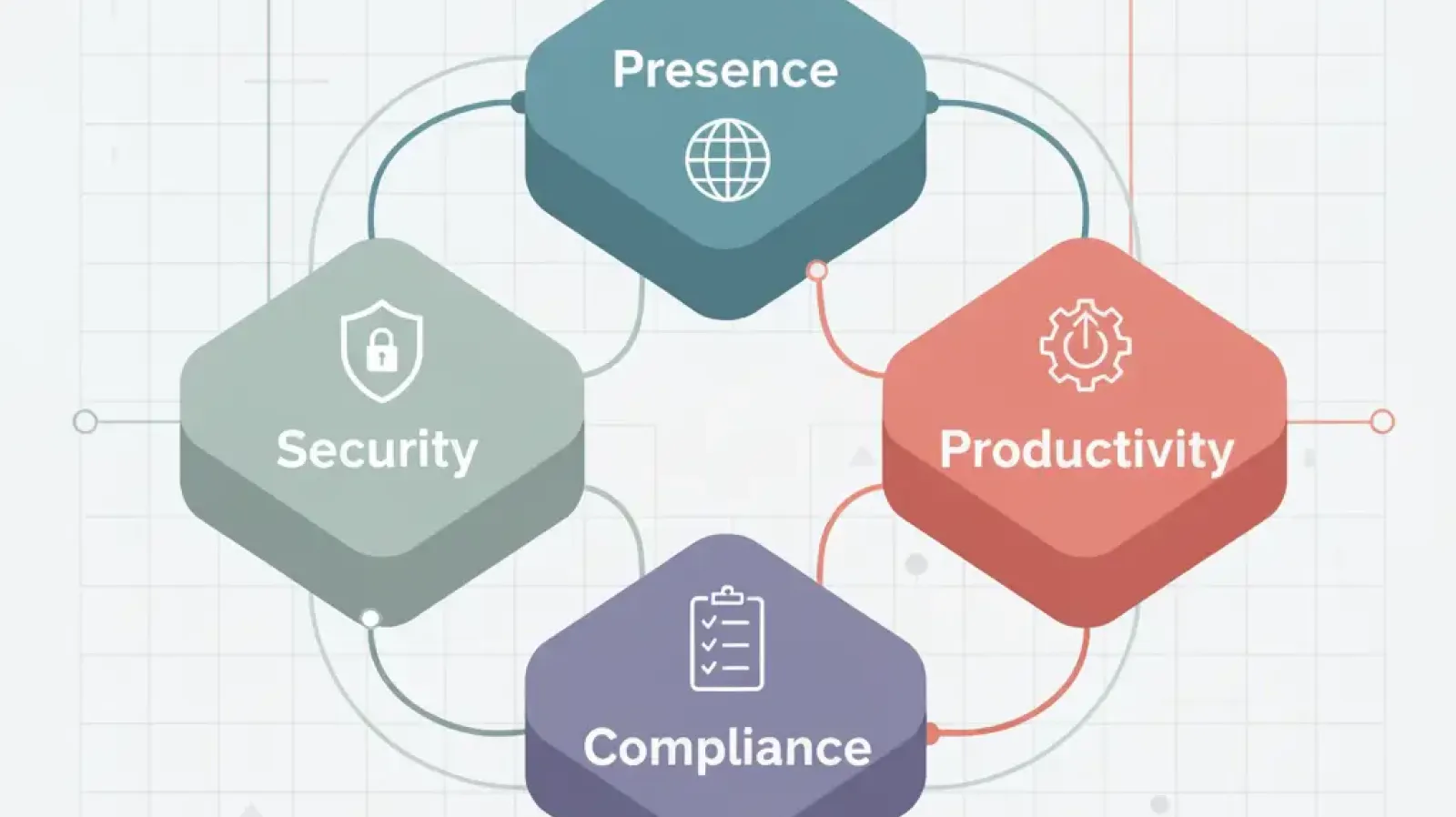
We’ve identified four high-impact areas where software investment delivers the greatest return:
Presence
Security
Productivity
Compliance
Let’s break them down.
📣 Presence
Your digital presence is your first impression and often your only one. Investing in tools that shape how customers see you online helps build trust, attract attention, and create brand consistency across platforms. Visibility isn’t optional, it’s your reputation.
Your online presence is the image customers and users see when they look for you. It’s your storefront, your handshake, your pitch. Investing here builds visibility, consistency, and brand trust.
Examples include:
- Website & content creation
Tools like your company website, Canva for design, AI content generators, and newsletter platforms like MailChimp or Beehiv help you craft and distribute your brand story. - Social media management
Managing your presence across platforms like LinkedIn, Facebook, and Instagram is made easier with tools like Sprinklr and HootSuite, which centralize scheduling, analytics, and engagement.
🔐 Security
Security is no longer a backend concern, it’s a frontline business priority. From ransomware to data breaches, the risks are real and rising. Investing in layered security tools protects your assets, your customers, and your credibility in an increasingly hostile digital landscape.
Safeguarding your assets, data, and customer privacy is essential. With threats like ransomware projected to cost businesses $57 billion by 2025, security software is no longer optional, it’s mission critical.
Key categories include:
1. General Security
- Antivirus and Anti-malware: Scans for and removes malicious software like viruses and ransomware.
- Intrusion Prevention: Monitors network traffic for malicious activity and automatically blocks intrusions.
2. Specialized Security
- Endpoint Security: Protects individual devices like laptops and mobile phones.
- Cloud Security: Platforms like Orca Security offer compliance, vulnerability management, and API protection.
- Email and SaaS Security: Tools like Abnormal AI defend against account takeovers and cloud email threats.
- Network Monitoring: Wireshark and Snort help analyze traffic and detect threats.
- Identity and Access Management (IAM): Controls user access to systems and sensitive data.
⚙️ Productivity
Productivity software turns effort into output. Whether it’s collaboration, automation, or project management, the right tools help your team move faster, stay aligned, and deliver results. Efficiency isn’t just operational, it’s competitive.
Software that enables team and company efficiency is a growth multiplier. These tools help you move faster, stay organized, and deliver results with less friction.
Examples include:
- Office Suites
Microsoft 365, Google Workspace, and LibreOffice form the foundation of digital work: used for creating, editing, and managing documents and presentations. - Project and Task Management
Tools like Trello, Asana, and ClickUp help teams plan, track, and manage work from start to finish: boosting accountability and transparency. - Communication and Collaboration
Slack, Microsoft Teams, and Zoom centralize conversations and file-sharing, critical for both remote and in-office teams. - Cloud Storage and File Sharing
Google Drive, Dropbox, and OneDrive allow teams to store, access, and collaborate on files from anywhere, with version control built in. - Automation and Integration
Zapier, N8N, and IFTTT connect different apps and automate repetitive tasks: freeing up time for higher-value work.
📋 Compliance
Compliance isn’t just about avoiding penalties, it’s about proving trustworthiness. From data privacy to financial regulations, investing in compliance software helps you stay audit-ready, build customer confidence, and scale responsibly.
Compliance software helps organizations adhere to laws, standards, and internal policies. These tools automate monitoring, reporting, and risk management, protecting your business from legal, financial, and reputational harm.
Key categories include:
1. IT and Security Compliance
Platforms like Vanta, Sprinto, and Netwrix focus on continuous security monitoring, evidence collection, and automated reporting: ideal for SaaS and cloud-hosted businesses.
2. Governance, Risk, and Compliance (GRC) Platforms
AuditBoard, LogicGate, SAP GRC, and IBM OpenPages offer integrated frameworks for managing governance, risk, and compliance across large enterprises.
3. Data Privacy and Consent Management
OneTrust, Usercentrics, IUBenda, and Enzuzo help businesses manage user consent, track data processing, and comply with global privacy regulations.
4. Anti-Money Laundering (AML) and Financial Compliance
Sanction Scanner, ComplyAdvantage, and LexisNexis Risk Solutions support financial institutions with transaction monitoring, sanctions screening, and customer due diligence.
🧭 Final Thoughts
Software is about building a business that’s visible, secure, efficient, and trusted, not just about streamlining operations. When you invest in the right areas, you don’t just improve workflows, you elevate your brand, protect your reputation, and create a foundation for scalable growth.
At Gato Blanco, we help leaders make these investments count: turning reliability into a product, and software into a strategic advantage.