
Breadcrumb
Carbon Credits, 3D Maps, and Eight Weeks Of Work We're Proud Of
Nobody goes into conservation because they're passionate about web development. They go in because they care deeply about forests, communities, wildlife and the planet. The conservation technology website is just the thing that needs to exist so the rest of the work can reach the people who should care about it too. We got to build that thing for the Chyulu Hills REDD+ Carbon Project this year and it turned out to be one of the more interesting and technically demanding projects we've taken on.
For those unfamiliar, REDD+ is a United Nations climate change mitigation mechanism that creates financial incentives for forest preservation in developing countries by putting a tangible value on standing forests. The Chyulu Hills project does exactly that, protecting one of Kenya's most important ecosystems while generating carbon credits for international buyers and creating sustainable livelihoods for local communities. The conservation technology website needed to communicate all of that clearly and compellingly to audiences ranging from conservation professionals who understand the technical details of carbon offsetting to first-time carbon credit buyers who needed to understand why a forest in Kenya should matter to them personally.
The Design Challenge Nobody Prepared Us For
Making something genuinely complex feel immediately accessible without losing the substance that serious stakeholders need is harder than it sounds and it drove most of our design and content decisions throughout the project. Conservation organizations tend to produce websites that serve their internal audience well and their external audience poorly, full of terminology that means something to people already in the sector and very little to the international buyers, philanthropists and policymakers they're actually trying to reach.
We pushed back on that from the start. A conservation technology website that only speaks to the converted isn't doing its job. The Chyulu Hills project needed to make sense to someone who had never heard of REDD+ and felt emotionally connected to a forest they'd never visited by the time they finished reading. That's a content and design challenge as much as a technical one and it shaped every decision we made about how information was structured, presented and sequenced throughout the site.
The Geo Data Problem
The project manages multiple conservation areas including Kuku A, Kuku B and others, each with detailed geographic data that needed to be interpreted accurately and presented in a way that felt alive and trustworthy rather than clinical and bureaucratic. Conservation organizations typically hold this data in formats that make perfect sense to GIS specialists and require significant interpretation before they can be presented meaningfully to a general audience.
We built custom tools to handle that interpretation. The goal was to take geographic data that describes conservation boundaries, land use patterns and project areas in technical terms and transform it into something that a prospective carbon credit buyer in London could look at and immediately understand. Not just see a map but feel the scale and the specificity of what's being protected and why it matters.
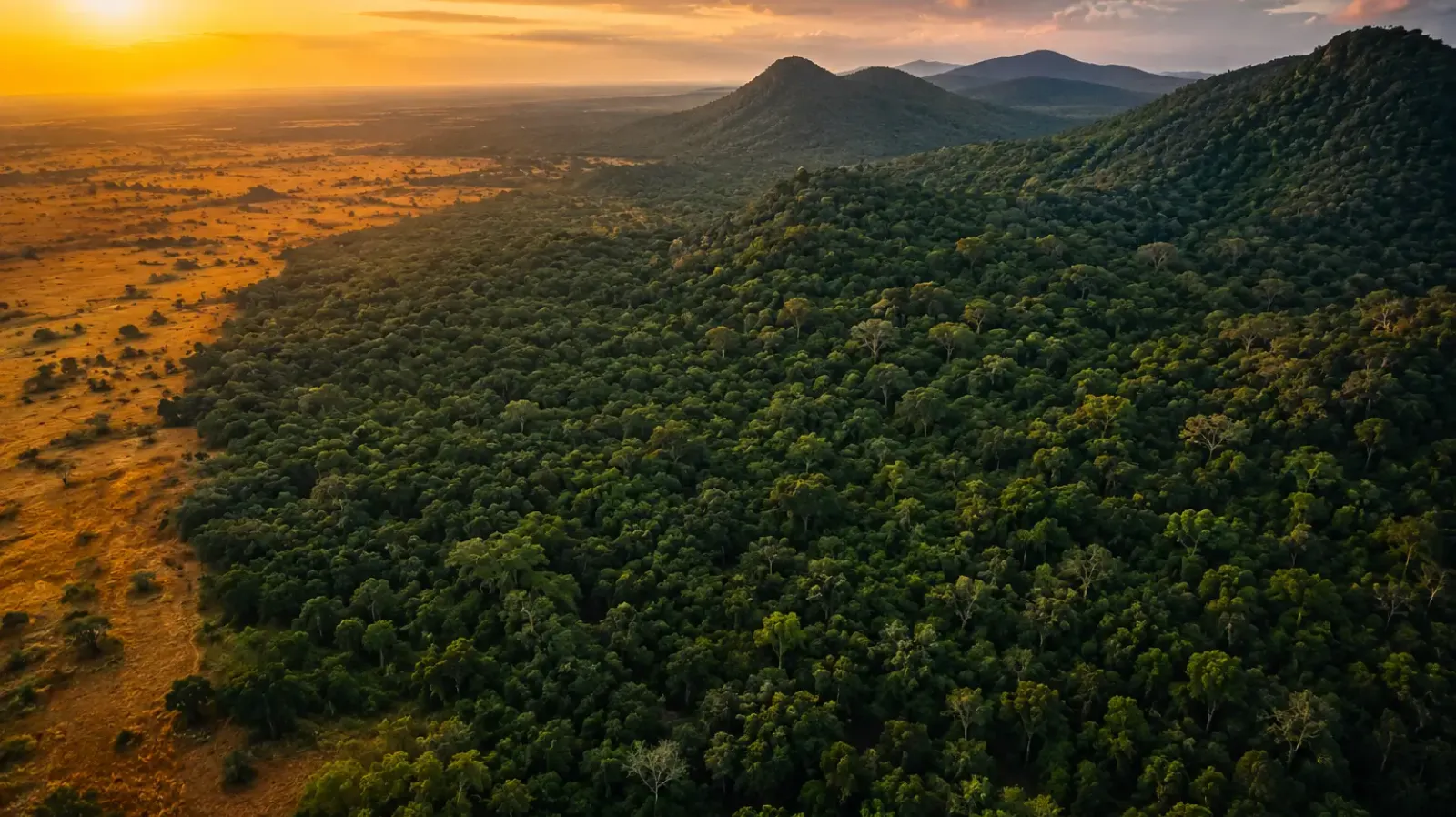
The integration with Google Maps with 3D capability was the piece that made that possible. Someone considering buying carbon credits from the Chyulu Hills project can now see the landscape they're protecting from above, zoom into specific conservation areas, understand the geographic relationship between different project zones and get a sense of the actual terrain in a way that static maps and text descriptions never quite achieve. The difference between reading about a forest and seeing it from above changes how you feel about it and that emotional connection is what conservation technology websites should be creating.
What We Built Beyond The Brief
Eight weeks from brief to a live, fast, visually considered conservation technology website. The part that doesn't usually make it into project announcements is that we built more than went live. More sections, more pages, more of the digital infrastructure the project will grow into as it develops and as the client's content library expands to fill it. The client didn't have enough content to populate everything at launch so we built the foundation anyway because that felt like the right approach for work this meaningful. They were aware of it, genuinely happy about it, and everything will come to life as the project grows.
The speed matters for a different reason too. Conservation organizations are frequently time-sensitive in ways that commercial clients aren't. Funding cycles, reporting deadlines, stakeholder commitments and project milestones create real urgency around digital presence in ways that don't always show up in the initial brief. Eight weeks from brief to live is a meaningful capability for organizations that can't wait six months for a website that needed to exist yesterday.
The same attention to detail that went into our end-to-end testing process for Netglare went into every aspect of this build, because that's the standard we hold ourselves to regardless of the project.
What This Project Taught Us About Conservation Technology
We've been having more conversations with conservation and advocacy organizations across East Africa and this project confirmed something we'd been noticing consistently: the technical challenges these organizations face are genuinely complex, specific to their context, and deeply interesting to solve well. Geographic data that needs to feel human and accessible to diverse audiences. Impact stories that need to reach local communities and international funders without losing meaning in translation. Digital infrastructure that needs to grow with the project rather than constrain it.
It's the same instinct that led us to build data accumulation into Netglare's monitoring intelligence rather than just real-time alerting: understanding that the most valuable technical solutions are the ones that get more useful over time.
Conservation technology websites aren't standard web development projects and the organizations doing this work deserve technical partners who understand that. The sector has specific needs around data visualization, geographic information, multi-audience communication and long-term digital infrastructure that don't fit neatly into standard agency service offerings. We're increasingly finding that the work is intellectually engaging, the missions are meaningful, and the technical problems are exactly the kind that get us out of bed in the morning.
If your organization is working in conservation, environmental advocacy, or the broader mission-driven space and you're facing a technical challenge that feels too specific or too layered for most agencies, we'd love to talk about what's possible. Reach out at getstarted@gatoblan.co or visit gatoblan.co.