
Breadcrumb
Netglare: For Dev Teams – The Difference Between 'Another Alert' And 'Something Actually Matters'
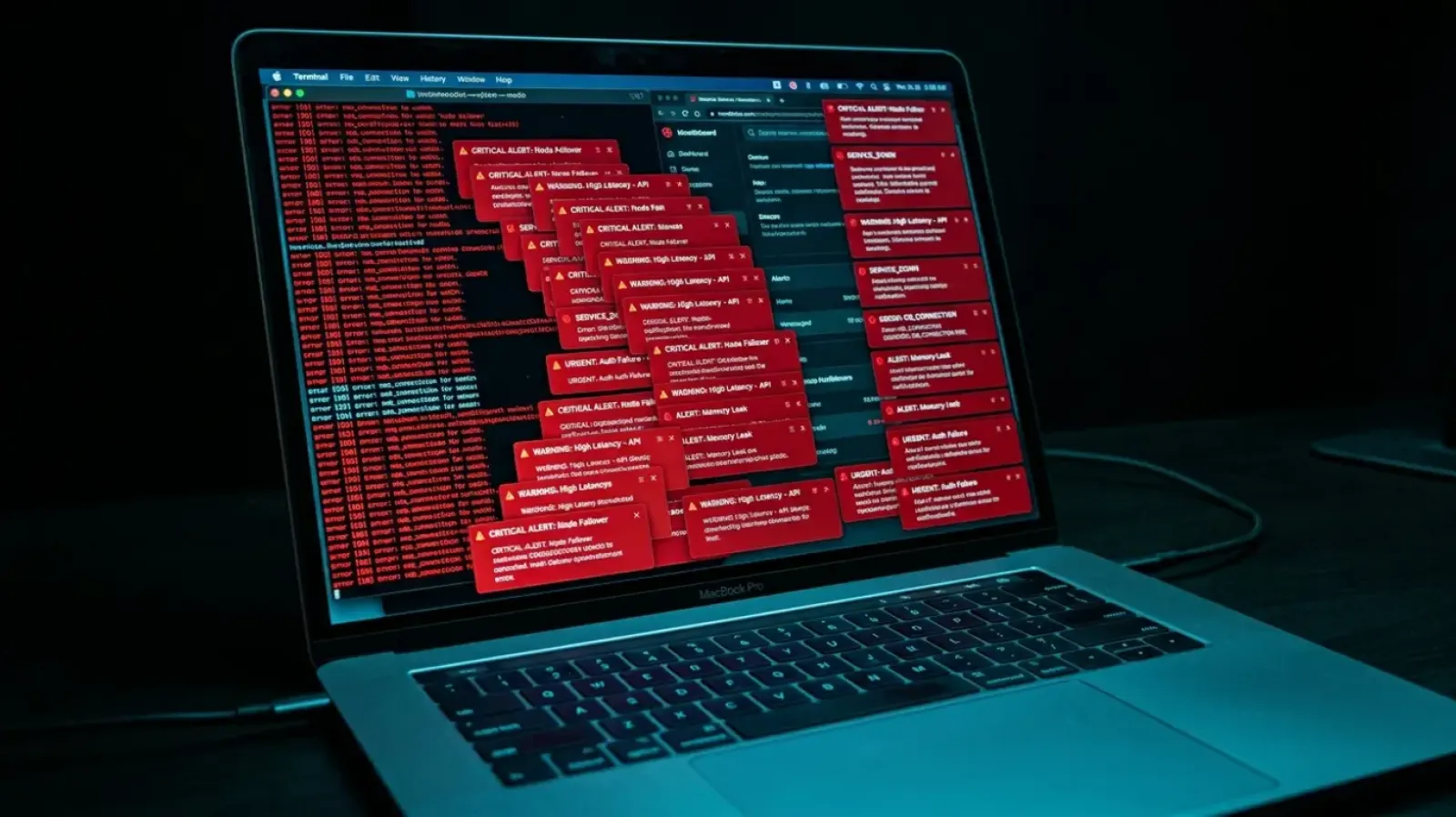
Monitoring tools for dev teams have a fundamental design tension that most of them resolve in the wrong direction. Comprehensive monitoring requires watching everything. Useful monitoring requires only surfacing the things that actually need human attention. Most monitoring tools prioritize the first goal over the second and leave the filtering entirely to the developers who are already spending too much time managing alerts instead of writing code. The result is teams that are technically well-monitored and practically drowning in noise.
Your dev team didn't sign up to be professional alert responders. They signed up to build things. Monitoring tools for dev teams should protect that.
The Flow State Problem
Flow state is the condition where developers do their best work. It takes time to reach, it's fragile once you're there, and every interruption has a cost that extends well beyond the duration of the interruption itself. Research on developer productivity consistently shows that recovering full concentration after an interruption takes significantly longer than the interruption itself, which means a two minute alert investigation that turns out to be a false alarm isn't a two minute cost. It's a fifteen to twenty minute cost dressed up as a two minute one.
Monitoring tools for dev teams that fire alerts for everything regardless of severity, relevance, or whether the issue requires immediate human attention are not protecting developer productivity. They're systematically destroying it one notification at a time. The engineers learn to manage this by developing personal filtering systems, checking the alert, making a quick judgment about whether it matters, and either acting on it or dismissing it and trying to get back into focus. That judgment call is reasonable in isolation and exhausting at scale when it happens dozens of times a day across a team that should be building features instead of evaluating notifications.
What Alert Grouping Does For Dev Teams
When something breaks in your infrastructure, everything downstream breaks with it. Your server goes down, your database loses its connection, your API starts failing, your endpoints time out. A monitoring tool that treats each of those as a separate alert gives your on-call developer a flood of notifications for one incident with no clear indication of which one is the cause and which ones are just consequences. They spend the first part of every incident not fixing it but reconstructing what actually happened from a pile of notifications that all arrived at the same time.
Netglare groups related alerts into single incidents so your dev team sees the problem instead of the symptoms of the problem. One incident, everything affected listed clearly, a starting point for investigation that doesn't require reading through forty seven notifications to construct. The noise disappears and the signal is immediately actionable. Your developer wakes up at 2am, reads one incident notification, knows exactly where to start, and gets back to sleep faster because they spent their time fixing the problem instead of figuring out what the problem was.
Monitoring tools for dev teams should make incident response faster and less cognitively expensive. Alert grouping is the most direct way to do that.
What Threshold Calibration Does For Dev Teams
The second most common source of alert noise in engineering teams is thresholds that were configured with good intentions and imperfect information. Someone set up monitoring when the system was first deployed, made reasonable guesses about what thresholds made sense, and those thresholds have been generating alerts ever since regardless of whether the system's normal behavior has changed, whether the original guesses were right, or whether the alerts they generate are actually actionable.
After seven days of alert frequency data, Netglare starts recommending threshold adjustments based on your infrastructure's actual behavior patterns. Not automatically changing anything, just surfacing the observation that this endpoint has been triggering alerts at this threshold twenty three times in the past week and based on its normal behavior the threshold appears too sensitive. Here's what it would suggest instead.
For dev teams, this means monitoring tools that get smarter over time instead of generating the same false alarms indefinitely. The thresholds that were set up on day one get refined based on how your infrastructure actually behaves in production, which is almost always different from how it behaved in the environment where the thresholds were originally configured. Less noise, more signal, less time spent evaluating alerts that were never going to require action.
What The Weekly Digest Does For Dev Teams
Monitoring tools for dev teams tend to focus entirely on real-time alerting and leave the weekly picture to whoever remembers to pull it together for the Monday morning engineering review. That's usually a manual process involving multiple dashboards, some mental arithmetic, and a summary that varies in quality depending on who assembled it and how much time they had.
Every Monday at 08:00 EAT, Netglare sends every verified user on your account a weekly infrastructure health report compiled from seven days of monitor snapshots. Overall weighted uptime across all endpoints, per-endpoint performance sorted worst-first, p95 response times, total incident count, average mean time to resolution, and a status classification for every endpoint. If an endpoint had a perfect week, it gets recognized specifically because good weeks deserve acknowledgment and engineering teams that only hear about their infrastructure when something goes wrong develop an understandably negative relationship with monitoring in general.
The digest reaches everyone on the team simultaneously, which means engineering reviews start from a shared understanding of how the previous week went rather than from whatever the person who assembled the summary happened to emphasize. It also reaches the engineering manager and the CTO without requiring them to log into a dashboard, which keeps infrastructure health visible at the level where decisions about engineering priorities get made.
What Changes For Your Team
The engineering teams that get the most value from monitoring tools for dev teams are the ones that have decided alert fatigue is a tooling problem rather than an attitude problem. It's not that developers need to be more disciplined about checking alerts. It's that monitoring tools have been generating too much noise for too long and the teams living with that noise have adapted to it in ways that compromise both their productivity and their ability to catch the alerts that actually matter.
Alert grouping means your on-call developer gets woken up for incidents, not symptoms. Threshold calibration means your monitoring learns your infrastructure instead of requiring your team to maintain it manually. The weekly digest means everyone starts Monday with the same picture of how the previous week went without anyone having to compile it. Monitoring tools for dev teams should reduce the cognitive load of infrastructure awareness, not add to it.
That's what Netglare is built to do. Less noise, more signal, more time building the things your team was actually hired to build.
Head to netglare.com and see what your alert experience could look like. Sign up for a trial and monitor your infrastructure for a week. Or reach out directly at getstarted@gatoblan.co if you want to talk through your specific team situation.